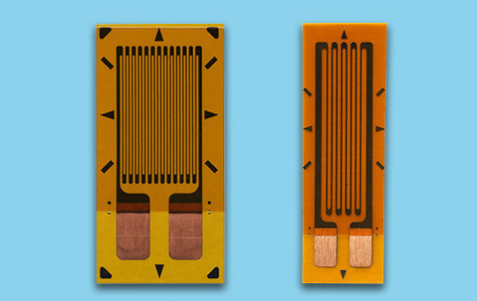
Electrical resistance strain gauges have a metalic foil in a pattern encapsulated in a substrate material. They are bonded to bonded to components under test or used in various types of transducers. As the material they are bonded to strains under load the resistance of the foil increases. This change in resistance can be measured by passing a small current through the strain gauge and measuring the change in voltage using a Wheatstone bridge.
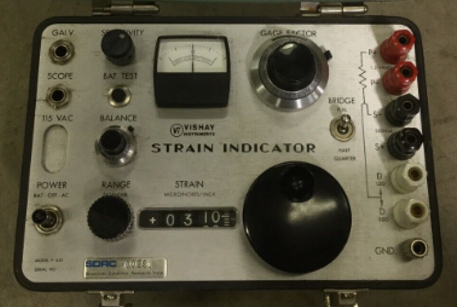
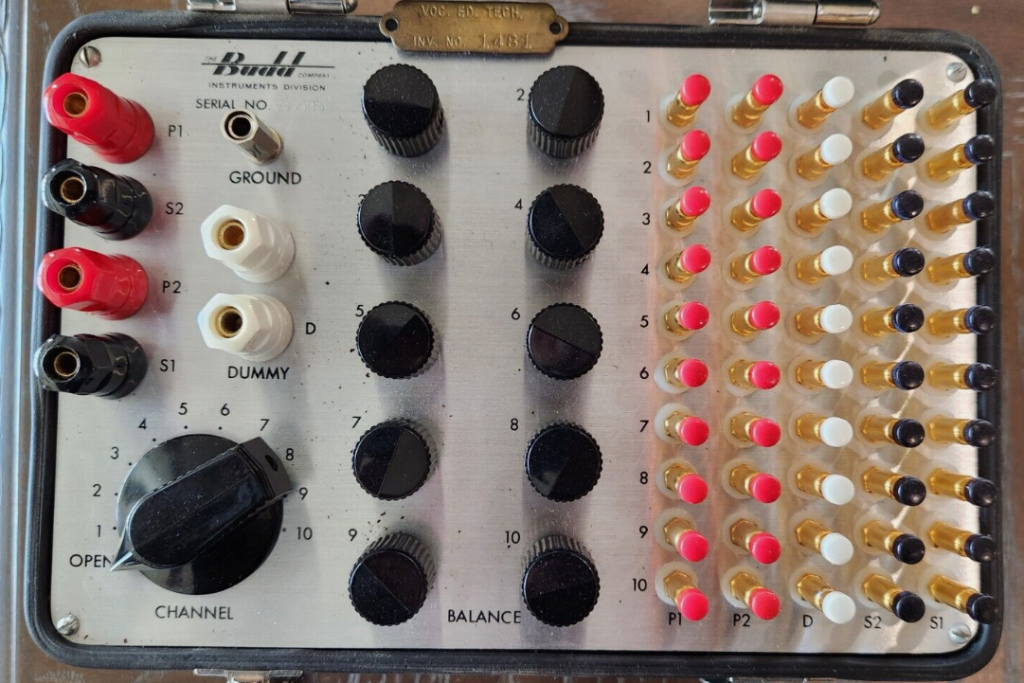
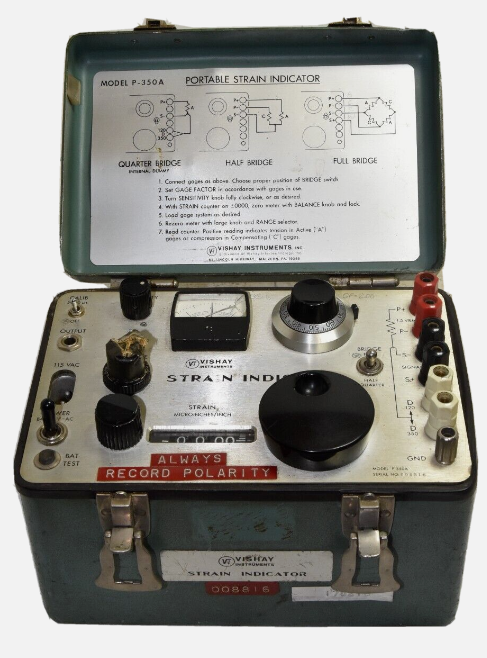
The Vishay Precision Group in Wendell, NC has been making strain gauges and accessories for many years. Below I’m showing a P-350 strain indicator and a SB-10 switch and balance unit. The strain indicator allowed you to read a single gauge and the switch and balance unit allowed you to switch a single indicator between 10 different gauges. After setting the gauge factor, a measurement was taken by turning the black knob, which incremented the strain reading, until needle indicator was in the middle. There was also a plug where you could connect the device to another device (perhaps an x-y plotter at the time) to capture dynamic measurements.
I’ve always thought these were beautifully made pieces of engineering history.